
Closing the Fraud Detection Gap: Key Takeaways from Five9's Webinar on Modern Fraud Communications

August 13, 2026
In my recent article, “The Fraud Detection Gap: Why Financial Institutions Need a Better Way to Notify Customers," I discussed a growing challenge facing banks, credit unions, and financial services organizations. While fraud detection technology has become remarkably sophisticated, customer communications often haven't kept pace.
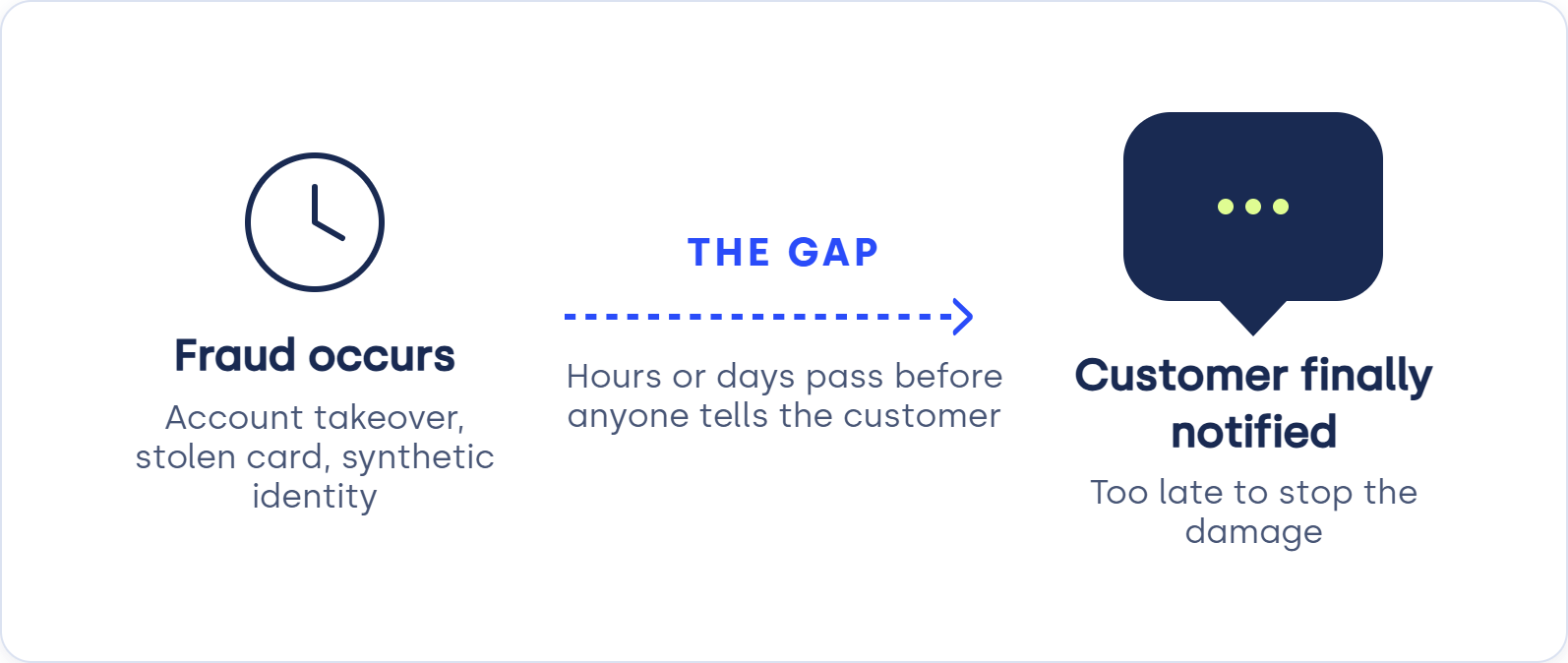
The fraud detection gap is the stretch of time between the moment fraud happens and the moment anyone actually catches it. Maybe the data’s siloed. Maybe the system just isn’t fast enough to connect the dots. Either way, that’s when the real damage gets done — every extra minute gives bad actors more time to drain accounts, rack up losses and dig themselves deeper into a system before anyone notices.
That gap was the focus of the recent Five9 webinar, “Stopping Fraud Before It Stops You: How Financial Services Leaders Are Winning the Fight,” featuring Five9 outbound communications expert Manu Yegnaraman.
The webinar reinforced an important message: financial institutions don't have a fraud detection problem nearly as often as they have a fraud communication problem.
Why is there a gap between fraud detection and customer notification?
One of Manu's biggest observations was that most financial institutions already have effective fraud detection systems.
Whether they're using FICO Falcon, Featurespace or proprietary AI models, suspicious activity is often identified within seconds.
The breakdown occurs after the alert.
"There is a gap — sometimes hours wide — between when the system knows something is wrong and when the customer finds out," Manu explained. "During that gap, the fraud window stays open."
Every minute matters. Additional fraudulent transactions occur, customer frustration grows and resolution becomes more expensive.
The financial services institutions making the biggest gains are the ones communicating with customers faster.
Why traditional fraud notifications are falling short
The webinar highlighted several operational challenges that continue to plague financial institutions.
Many organizations still rely on manual processes to initiate outbound fraud campaigns. Fraud analysts review alerts, build contact lists and launch outreach after suspicious activity has already been identified.
Voice-only outreach presents another challenge. Customers increasingly ignore unknown phone numbers, while spoofed caller IDs and "Spam Likely" labels have made consumers even more skeptical of unexpected calls from their bank.
The result is a frustrating paradox: banks are trying to protect customers, while customers have been trained not to trust unsolicited communications.
Disconnected communication channels create another challenge. Customers may receive a text message, an email and a phone call from different systems, only to call the bank and wait in a generic queue while explaining the situation all over again. This fragmented communication creates confusion for the customer.
The Five9 approach: connecting detection to customer engagement
One of the webinar's central themes was that fraud detection and customer communications should operate as a single workflow, rather than separate systems.
Manu described Five9 Advanced Campaign Manager (ACM) as the intelligent communication layer that sits between fraud detection platforms and the customer.
Instead of waiting for manual intervention, Five9 automatically transforms fraud alerts into immediate, compliant, omnichannel customer outreach. Whether the preferred channel is SMS, email, push notification or voice, customers receive notifications quickly through the channel they're most likely to use.

Just as important, customers can often confirm or deny suspicious activity directly from the notification itself, eliminating unnecessary phone calls and accelerating fraud resolution.
Six ways Five9 helps financial institutions respond faster
During the webinar, Manu walked through several common fraud scenarios where automation can dramatically improve both fraud prevention and customer experience.
These included:
Real-time fraud alerts that notify customers within seconds after suspicious activity is detected.
Account takeover protection, using immediate authentication challenges when unusual login activity or credential changes occur.
Mass breach notifications that allow thousands of customers to be contacted simultaneously while automatically enforcing compliance requirements.
Card-not-present transaction verification, enabling customers to approve or reject suspicious purchases before transactions are completed.
Automated dispute and chargeback communications, keeping customers informed throughout the resolution process and reducing inbound inquiry calls.
AI-driven outreach optimization, determining the best channel and best time to engage each customer based on previous behavior.
These capabilities help financial institutions move from reactive outreach to intelligent, proactive customer engagement.
Compliance doesn't have to slow you down
One topic that generated significant discussion was compliance.
Large-scale fraud events often require organizations to notify thousands — or tens of thousands — of customers in a matter of hours. At the same time, institutions must comply with TCPA requirements, Do Not Call regulations, consent management rules, state calling-hour restrictions and other regulatory obligations.
Managing those requirements manually introduces risk at a time when organizations can’t afford mistakes.
According to Manu, Five9 automates compliance checks before every communication, helping organizations accelerate outreach while reducing legal and regulatory exposure.
Building the business case
The webinar also focused on the financial justification for modernizing outbound fraud communications.
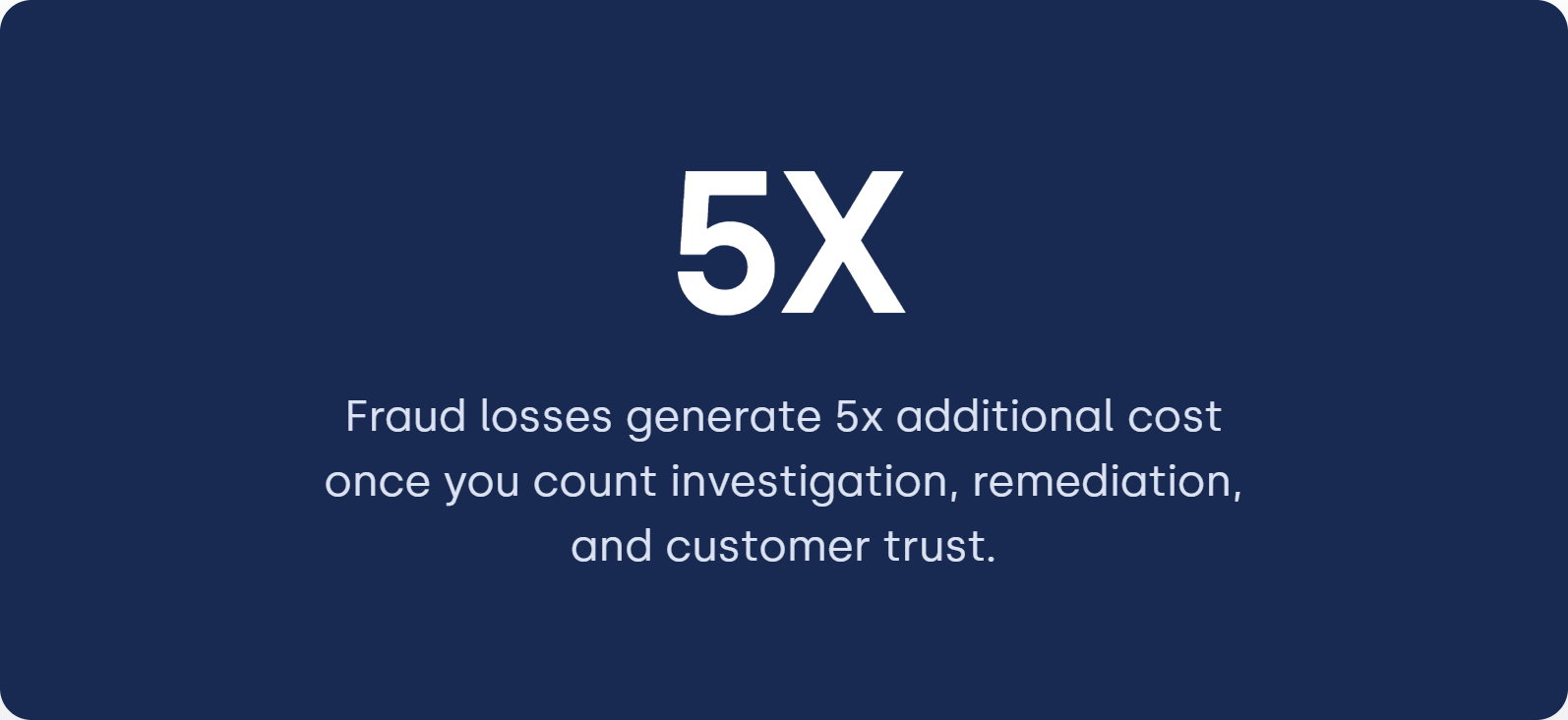
Rather than looking only at direct fraud losses, Manu encouraged organizations to consider the broader economic impact. Every dollar lost to fraud generates five times that in additional costs related to investigations, compliance, recovery efforts, customer service and customer churn.
He suggested that financial institutions start by calculating the true cost of fraud — not just the initial transaction loss — and then evaluate what even a modest reduction in fraud exposure would mean for the business.
Operational efficiencies add to the equation. Automating campaign creation, compliance checks, customer notifications, follow-up communications and response tracking reduces manual effort while allowing fraud operations teams to focus on higher-value work.
The result isn't simply lower fraud losses. It's faster resolution, lower operating costs, reduced compliance risk and a better customer experience.
Manu's biggest takeaway
When the webinar concluded, Manu left attendees with a simple challenge.
The technology to close the gap between fraud detection and customer notification already exists.
The question isn't whether financial institutions can automate proactive fraud communications. It's how long they can afford not to.
Every hour between fraud detection and customer notification is another hour in which fraud can continue, losses can increase and customer trust can erode.
For financial institutions looking to modernize fraud operations, improving detection remains important. But increasingly, competitive advantage will come from how quickly, intelligently and confidently organizations communicate with customers once fraud is detected.
As fraud continues to evolve, the winners won't simply be those who identify suspicious activity first — they'll be the ones who engage customers first.
Ready to close the gap? Watch the on-demand webinar.