The Benefits of Personalized Customer Service

July 16, 2026
Most customers can tell within seconds whether a company knows who they are. Not because the agent says their name, but because they don’t have to repeat themselves, the context from their last interaction carried over, and the response they get actually fits their situation. That experience isn’t guaranteed. But increasingly, it’s the thing that determines whether a customer stays one or not.
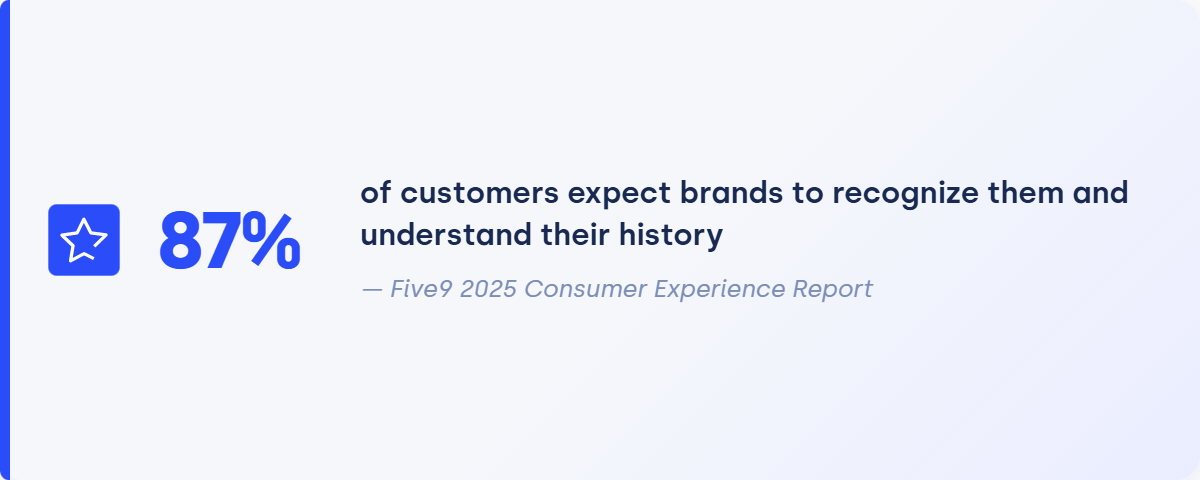
Research from Five9’s 2025 consumer experience report found that 87% of respondents value brands that recognize them and understand their history. That’s not a preference — it’s a baseline expectation. And the companies that meet it are building something competitors can’t easily copy: loyalty earned through the quality of the interaction itself, not the product or the price.
What personalized customer service actually means
Personalized customer service is not a script with a first name in it. It means that a customer’s history, preferences and current context — what they’ve asked before, what they’re likely saying now, what channel they’re coming from — inform every step of each interaction, in real time.
Done well, it means a billing question doesn’t require the customer to re-explain their issue. A renewal conversation starts with the agent already knowing what’s at stake. A support escalation routes to the right person without a transfer chain.
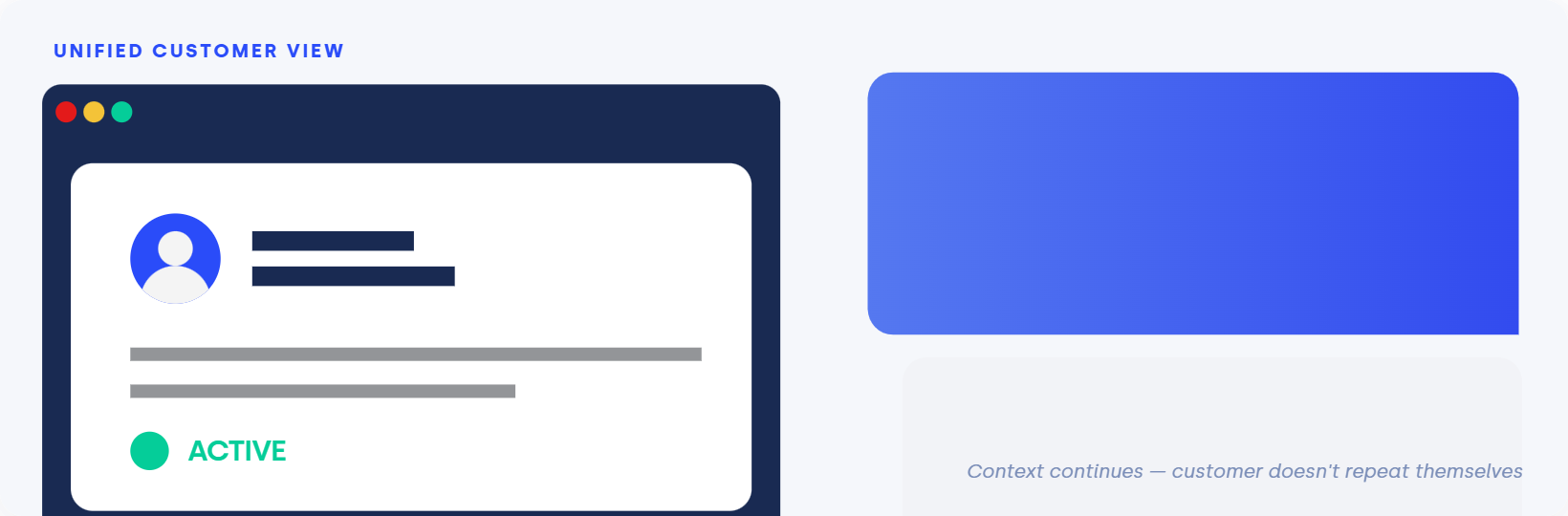
Context that doesn't carry across touchpoints forces customers to restart, and every restart weakens the relationship.
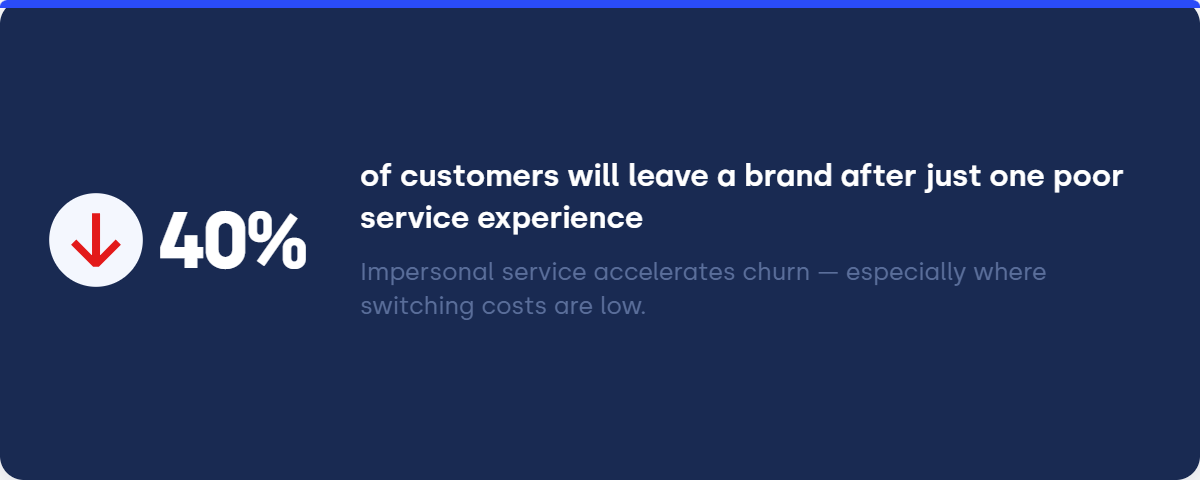
The cost of getting this wrong is direct. 40% of customers will leave a brand after just one poor service experience. Personalization isn’t a nice-to-have layer on top of a functioning contact center — it’s really what determines whether high-stakes interactions end in retention or churn.
Why scale has always been the hard part
The challenge has never been understanding that personalization matters. That’s been measurable for a while. It’s been executing it consistently across thousands of daily interactions without adding cost or complexity. That’s where AI changes the equation.
Five9’s AI agents and contact center services connect customer data, interaction history and real-time context into a single view — so whether a customer reaches out by phone, chat or email, the experience continues rather than restarts. AI handles the pattern recognition and routing that would otherwise depend on an agent having perfect recall or toggling through systems to unearth information, while the agent handles the judgment call that only a human can make.
This matters most in the moments that carry the highest stakes, like a healthcare question, a delayed order or a cancellation request. These are the interactions where custom CX services earn or lose trust, and where the gap between a personalized response and a generic one is most visible to the customer.
The business case for investing in personalized service
The argument for personalized customer service isn’t only about customer satisfaction scores. It’s also about protecting revenue.
Customers who feel recognized and understood are more likely to stay, more likely to expand their relationships with the brand and more likely to forgive the occasional failure.
Impersonal, high-effort service experiences accelerate churn — particularly in competitive categories where switching costs are low. Customer service solutions that treat every interaction as an isolated transaction are leaving both revenue and loyalty on the table.
Getting this right requires more than technology. It requires connecting the right data, building consistent processes across channels and giving agents the context they need at the moment it matters. That’s what integrated, AI-powered custom CX services are designed to do.
Where to start
Understanding your current performance is the foundation. Five9’s contact center scorecard is a good place to start. Or, go straight to the Five9 Business Leaders CX Report to see how leading organizations are connecting AI, data and human expertise to turn every interaction into a loyalty moment.