The LGBTQIA+ Rainbow Flags, History, and Variations — And Why They Matter

June 7, 2022
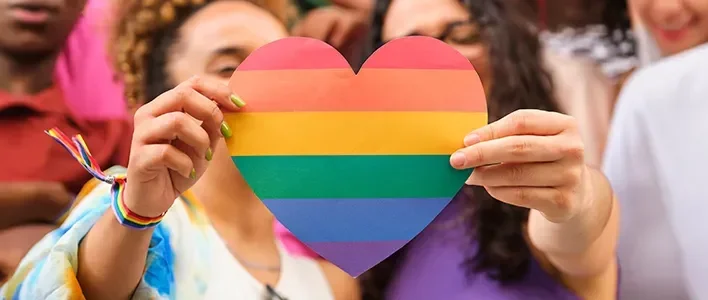
June is Pride Month, when the world takes special time to acknowledge and celebrate the LGBTQIA+ community. Allies and the community itself hold parades and parties, and, most importantly, celebrate the inherently diverse nature of humankind.
For many, the rainbow flag is a symbol of the month — and of LGBTQIA+ Pride in general — and adorns many a household as well as company logos and/or products.
Let's take a look at the history and evolution of the rainbow flag, from where it started to how it is presented today, and its compatriots that celebrate the many sexual orientations and gender identities represented in the community.
A symbol of and for Pride
It's common knowledge that the rainbow flag is a symbol of LGBTQIA+ Pride. But for many, the rainbow symbol evokes more than just a representation of a community; it's a sign of acceptance that is sometimes difficult to otherwise find.
“Pride to me means being able to be my truest self in every part of my life, both personally and professionally. It means getting to hold my wife's hand in public and feel safe. It means working for a company who respects me for who I am. And it means leading the charge in self-love for the next generation of people in the LGBTQIA+ community.“
- Jessica Shea, Mgr of Partner Marketing (she/her)
The rainbow flag became a symbol for gay Pride in 1978, when Gilbert Baker, an openly gay male artist and drag queen, was asked by Harvey Milk, the first openly gay elected official in the U.S., to design a visual representation for the LGBTQIA+ community.
What many don't know is that the colors all have special meaning. The original colors of the Pride flag included pink, red, orange, yellow, green, turquoise, indigo, and violet, and the colors all represent something specific. Pink represents sexuality, red symbolizes life, orange stands for healing, yellow for the sun, green represents nature, turquoise for art, indigo for harmony, and violet symbolizes the soul.
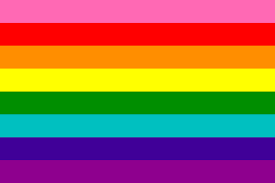
Gilbert Baker's original rainbow flag
But since then, the flag has changed six times, with the six-color Pride flag and Philadelphia Pride flag being major iterations.
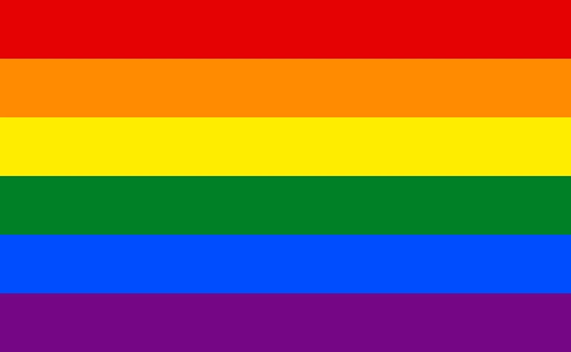
The six-color Pride flag
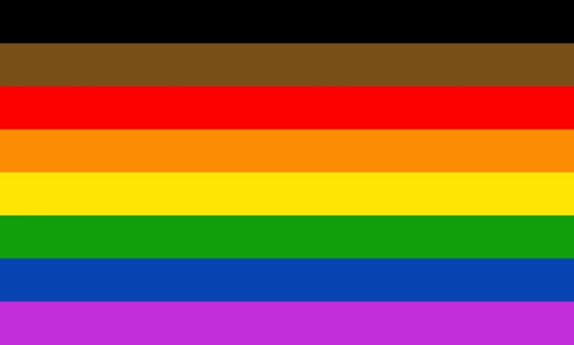
The Philadelphia Pride flag
The Progress Pride flag is often considered the most inclusive and representative of the greater LGBTQIA+ community and has multiple symbols to recognize various identities within the community, taking inspiration from those individual flags.
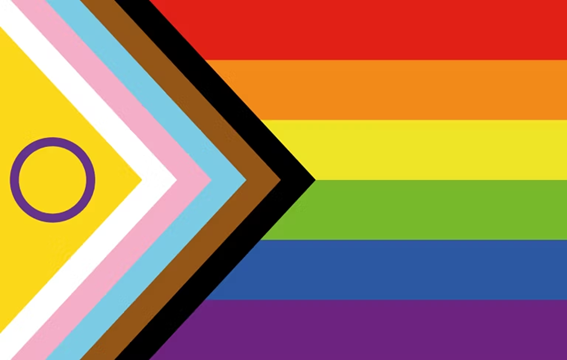
The Progress Pride Flag (2021)
These identities are as follows: transgender and gender nonconforming (GNC) or undefined identities are represented by the blue, pink, and white colors; people of color and those living with or have passed from HIV or AIDS are represented by the addition of a black and brown stripes; and the most recent addition, the yellow triangle with the purple circle on the inside, represents the intersex community. Also, the arrow that is formed points right to symbolize forward movement while acknowledging that there is still room for progress.
Sexual orientation and gender identity flags
Of course, the evolution from the original eight-color Pride Flag arose from the many different Pride symbols and flags that represent varied sexual orientations and gender identities. Below are just some of the community's flags, listed alphabetically, that help bring recognition to these groups.
Asexual (Ace) flag
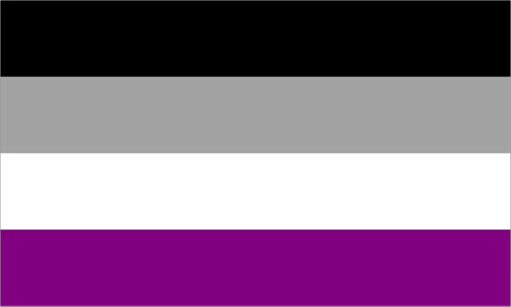
A flag chosen in 2010 by its people rather than designed, the Asexual Flag — also known as the Ace flag — was voted on for both its colors, which had already long represented the Ace community, and its simple nature.
Bisexual flag
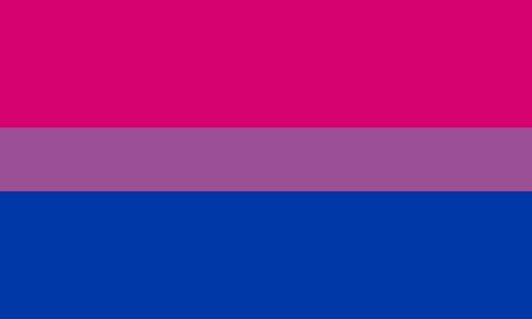
Stemming (and diverging) from the post-1950s use of pink and blue's association to female and male, respectively, the Bisexual flag represents bisexuals' attraction to both their same and different genders.
Genderflux flag
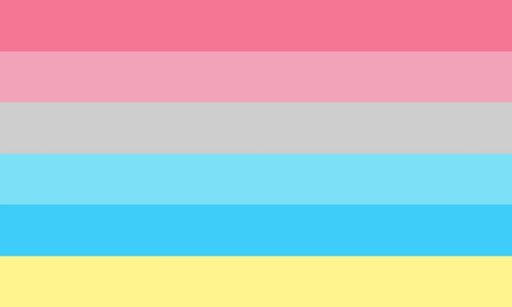
A relatively newer definition within the LGBTQIA+ community, the Genderflux flag represents those whose connection to specific gender identities changes in degree and intensity over time, and is representing by the near-gradient of pink, blue, and yellow to represent female, male, and non-binary genders, respectively.
Genderqueer flag
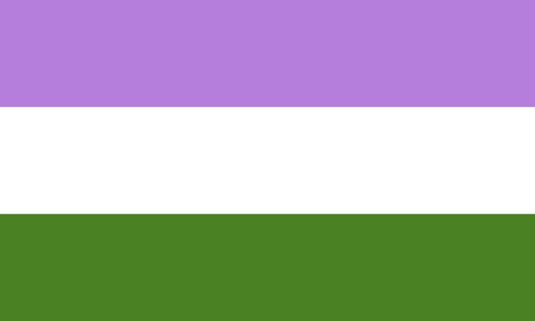
A flag intended to be wholly inclusive, the Genderqueer flag’s top stripe represents the queer community's long-standing association with the color lavender as well as the color’s representation of androgyny, white to represent agender identities, and dark green — the direct inverse of lavender — to represent those that fall outside of the gender binary.
Intersex flag
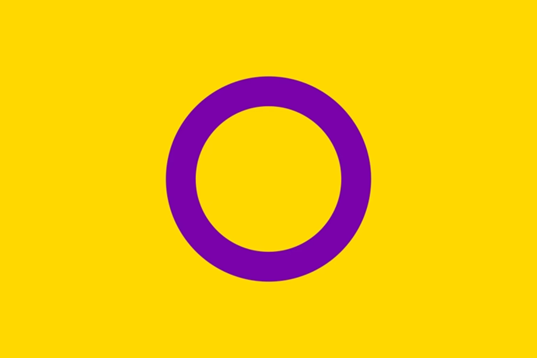
Standing apart from many other LGBTQIA+ flags from its yellow and purple colors, as well as its non-linear design, the Intersex flag represents that intersex people are whole as they are living outside the binary definitions of gender.
Lesbian flag
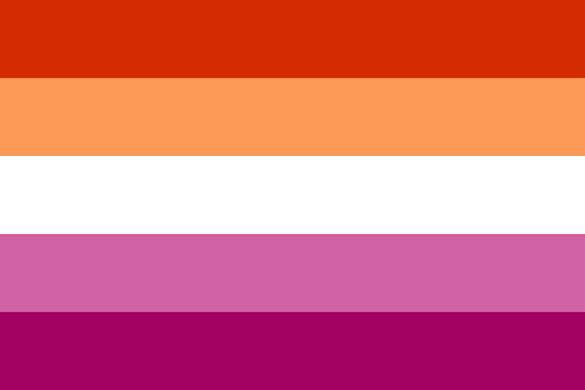
A flag with a partially contentious history, the 2018 version of the Lesbian flag was designed to be inclusive of the femme, butch, non-binary, transgender, and non-conforming identities within the lesbian community.
Maverique flag

The Maverique flag represents those who experience gendered situations but choose not to define themselves as male or female and use any pronouns at any time that represent their current inner conviction, choosing the yellow spectrum typically associated with non-binary identities.
Non-binary flag
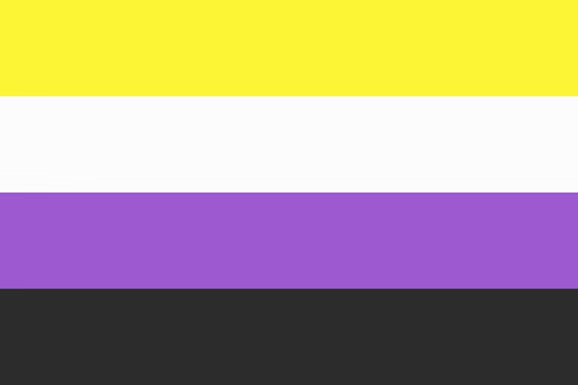
Representing those gender identities that do not fit within “male” or “female,” the Non-Binary flag was designed in 2014 by Kyle Rowan.
Pansexual flag

While many of the flags in this list represent specific types of sexual orientation or gender identity, Pansexuals define themselves as being attracted to a person rather than focusing on gender. Their flag represents this, with female (pink), non-binary (yellow), and blue (male) included to reject gender binaries and be wholly inclusive.
Transgender flag
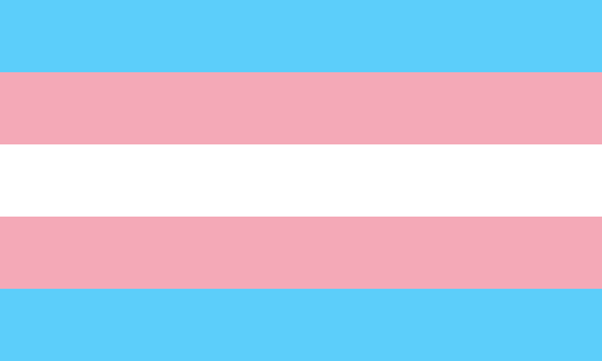
Debuting over a quarter of a century ago, the Transgender flag represents those who were assigned a biological sex at birth, but whose gender identity (male, female, non-binary, etc.) has transitioned to something else throughout their life. The symmetrical flag was specifically designed to allow for any flying orientation, representing trans people's gender fluidity and internal conviction of self.
Rainbow washing
To those outside the community, the LGBTQIA+ rainbow flag takeover on social media every June seems like a wonderful way to recognize Pride Month. However, many in the LGBTQIA+ community feel otherwise.
“Rainbow washing” has become the term for the seemingly instantaneous and universal change from company brand colors to rainbow symbols on June 1st — and their subsequent removal on July 1st. Rainbow washing is viewed as a performative act of support, rather than a meaningful or intentional expression of support.
While some companies have avoided time-limited rainbow recolors for more permanent representations, there's more work yet to be done to ensure the LGBTQIA+ rainbow flag — and the other flags in the community — remain powerful Pride symbols and real work is being done to be inclusive as a society.
Show up for your community
Understanding the meaning behind the colors and flags is important because of the real people, real-life experiences, and continued challenges they represent. Pride Month, and the Pride community, extend beyond just the colors of a flag.
“My Pride hero is Cleve Jones. I had no idea how much he impacted the Gay Pride movement of the ‘70s until I watched the TV miniseries 'When We Rise.' Then I read his book after that. He not only was a massive participant in the ‘70s movement, but he helped move legislation along and helped with the development of the AIDS quilt in the ‘80s. He survived through the perilous time of the 'gay cancer,' where most did not live through that time to tell the story.”
- Roni Jamesmeyer, Sr Healthcare Marketing Mgr
LGBTQIA+ Pride is especially important for companies to consider when — while done with good intentions — displaying Pride colors in their advertising, social media, and in Pride parade contingents can be seen as performative in nature rather than truly representative of the allyship that is necessary throughout the year.
This Pride Month, take time to learn about LGBTQIA+ history and culture. We all have the responsibility of doing more than the performative. We must commit time to understanding those in the community and how to be better allies.